We have serious antenna plans. The good news is that executing them doesn’t necessarily demand a serious budget. Instead, it requires knowing where to look and the willingness to put in some elbow grease.
Over the past couple of years, we’ve been building a stash of dishes, poles, and towers that most research facilities would have to write a procurement justification, wait months for funding, and then more months for execution. Here’s how we bootstrap the whole thing.
MVPs find the right direction
We don’t wait until we have the “right” setup before we start learning. We stand something up, learn from it, and refine after proving that we’re heading in the right direction. Our gear stash exists to make these cycles low-cost and fast.
Case in point: our current antenna field includes everything from a fan dipole strung over a canyon to a full-wave 630m loop — the seed of what will eventually become our Giga Loop, a receive antenna covering over 15 acres of the property.
None of that happened by waiting for the perfect conditions or equipment. We build the minimum viable experiments, learn from them, and iterate from there. Let’s take a closer look at our gear stash and the story behind the pieces.
Free Ku-band dishes from neighbors
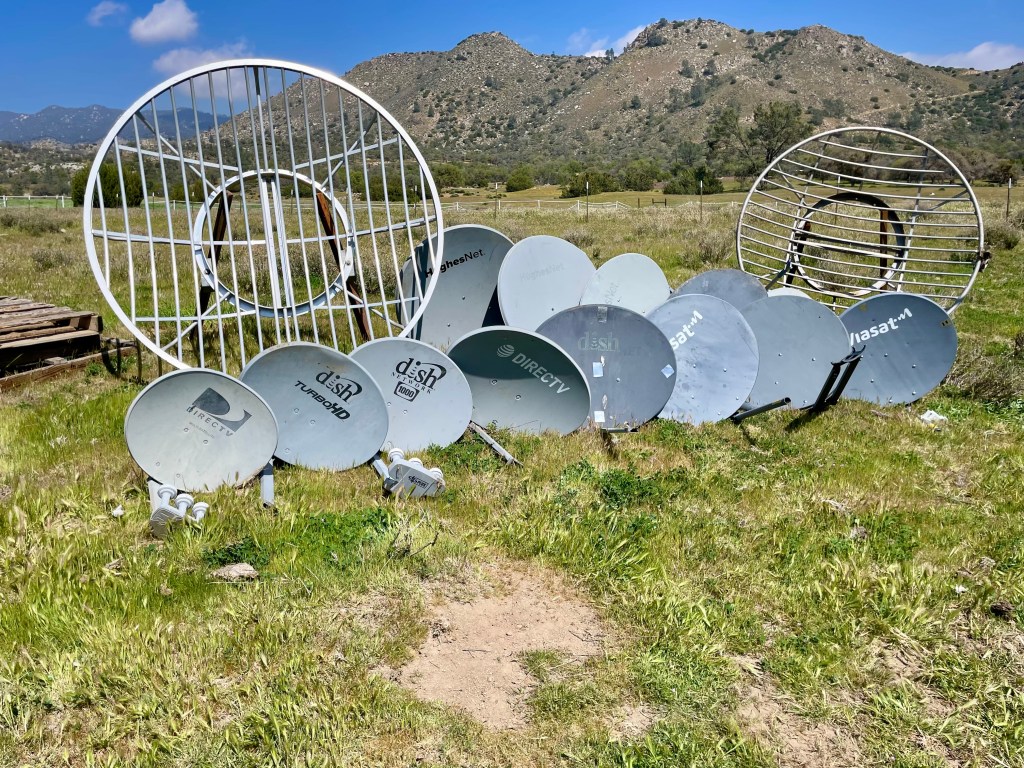
Rural neighbors upgrading to Starlink have one problem: what to do with the old HughesNet and Viasat hardware bolted to their roof or fence post? We solve that problem for them by taking the dish off their hands. Everyone wins.
The result is a growing collection of consumer satellite dishes, roughly 18 to 30 inches in diameter, from DIRECTV, Dish Network, HughesNet, Viasat, etc.
Applying Ku-band dishes to RF research
The smallest dishes (e.g., DIRECTV and Dish Network) are the least useful for us. With some exceptions, such as possible amateur use at 24GHz, the Ku- and Ka-band dishes aren’t effective parabolic reflectors. They don’t gather enough signal because they’re too small relative to the wavelengths we work with, and smaller dishes collect less signal anyway.
Why keep them in our mix? They weigh less and are physically easier to work with. They catch less wind and are sturdier. These characteristics make them prime material for testing new motorized azimuth/elevation tracking systems: we’ll know the target satellites’ positions and auto-calibrate our tracking systems by finding the maximum signal strength for a satellite.
Moreover, we can use universal feed mounts to attach X-band feeders to these Ka-band dishes. That doesn’t seem to make sense, as the gain will be low and the signal will be out of focus. However, that “weak, wide, and fuzzy” field of view will be beneficial when we take numerous repeated “quick whole sky” surveys, as smaller dishes can move faster and scan wider swaths of sky per streak.
Of course, there’s no free lunch. We pay the price in lower signal strength and less precision. However, the many wide-field-of-view low-res scans can give us insights that fewer, narrower beam-width high-res scans cannot. It’s like using a wide-angle lens to take high-ISO pictures to identify where to look before strapping on a long lens and taking a long-exposure photo for precision.
The hunt for giant C-band dishes
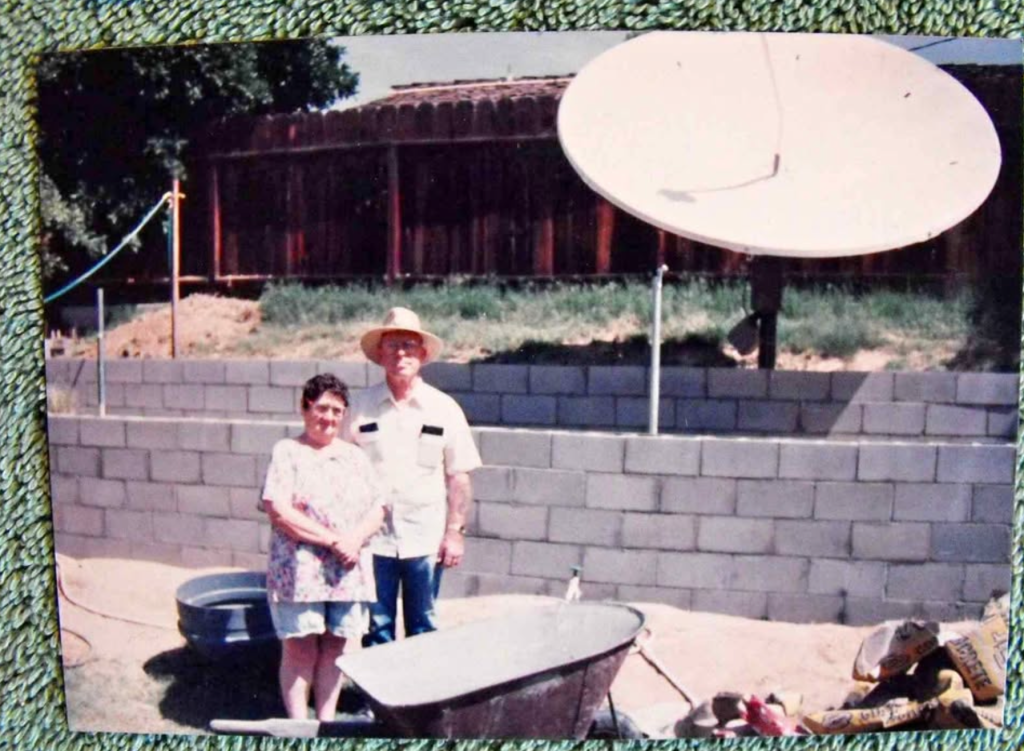
Before small dishes took over in the mid-90s, rural America ran on large C-band parabolic dishes — typically 8 to 12 feet across. Most of them are still out there, sitting in fields and backyards, inherited by people who have no idea what to do with them and no desire to move them.
We scored a couple of these from folks in our community and one from Facebook Marketplace. Even the transfer station attendant knows to keep a lookout for us.
Applying giant C-band dishes to RF research
A 10-foot dish is 20 times the longest wavelength, big enough to provide meaningful gain for S-band, such as tracking space missions (e.g., Artemis 2 operated on the 2.2 GHz band). Assuming a high surface precision, these dishes can work up to any microwave frequency we want to play with. In fact, the higher the frequency, the higher the gain and the narrower the bandwidth.
However, pivoting that behemoth around isn’t a zippy affair. It’s also hard to do that with high precision. As such, we use the smallest dishes to meet a study’s requirements, not the 10-footer for everything.
And yes, we’ll try moonbounce on the 13cm, 9cm, 5cm, and 3cm bands.
Our telephone pole pipeline
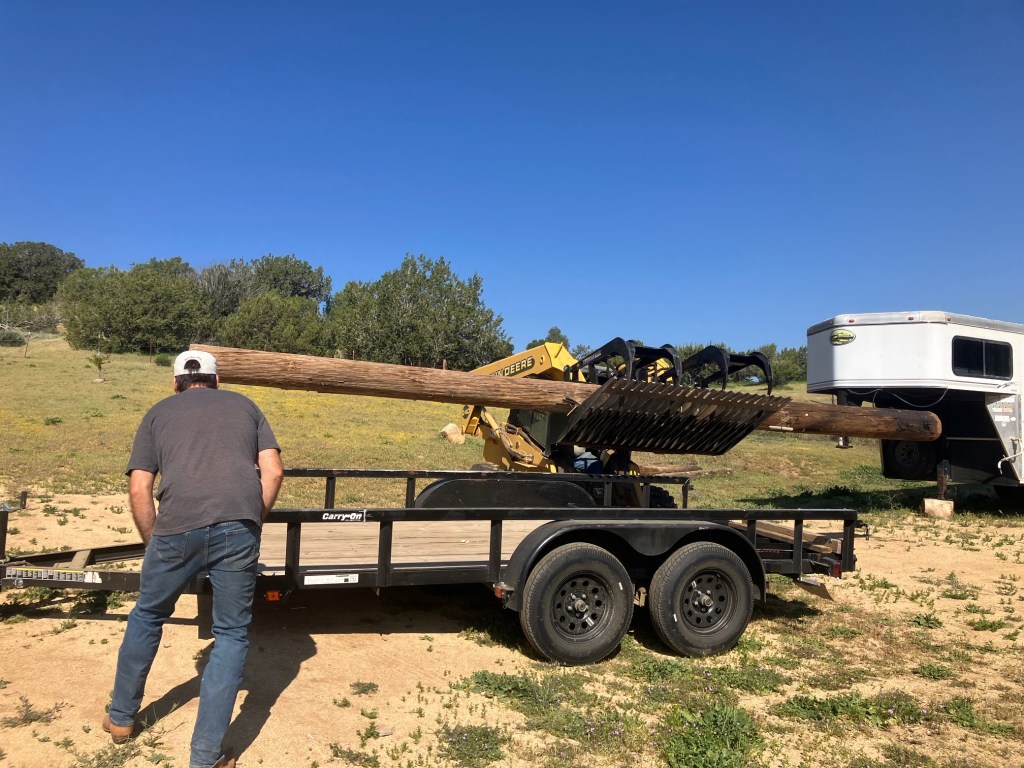
Old utility poles are a rural constant: properties accumulate them over decades, and nobody wants the hassle of removal or hiring someone to truck them out. We put the word out that we’re looking for phone poles, and people just say, “Come get ‘em!” We score pieces up to 27 feet tall — essentially a free antenna mast, already seasoned by years of outdoor service.
These are the workhorses behind our Beverage antenna wire support: quick to deploy, cheap to source, and sturdy enough for long wire runs across our 20-acre site. When an antenna design calls for spans stretching 1,500 feet across the site, not having to buy masts makes a real difference to the budget.
Beverage antennas don’t need to be high off the ground; just elevated enough so that roaming cattle and other animals don’t ruin them (fun fact: we’re in an open range area!) The stubby poles are great for this purpose and can also provide a sturdy base for temporary small masts. For example, we can strap a 30-foot mast to these poles, as long as the winds are under 70 mph.
Will drive 4 hours for antenna towers
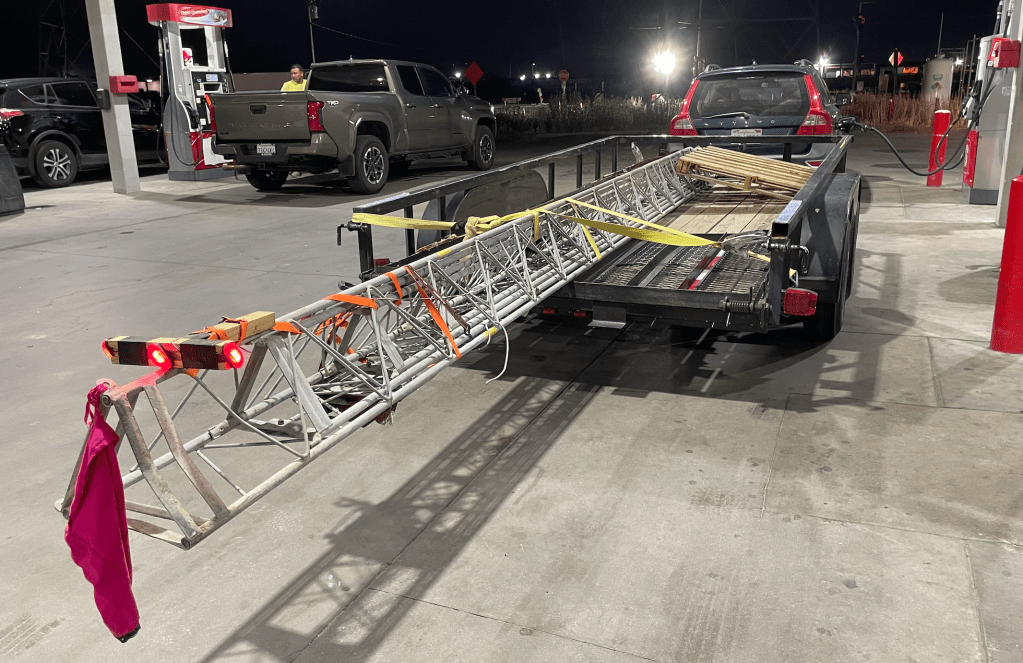
Telephone poles do the job, but antenna towers do it better. Yet, any ham operator who’s priced out new tower sections knows they’re a serious line item. For example, we recently scored a 67-footer that’s equivalent to the Tashjian WT-67 with an $8,677 price tag in its basic form, excluding transportation costs.
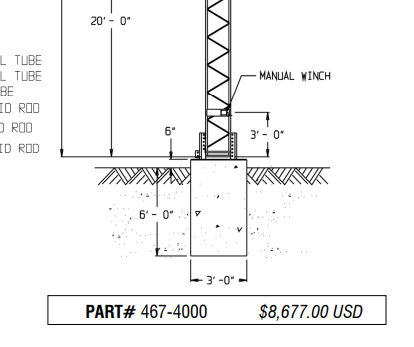
The good news is that used towers are a different story if you know where to look. Some people might have inherited them when they purchased a property. Some have to part with them because HOAs really don’t like them.
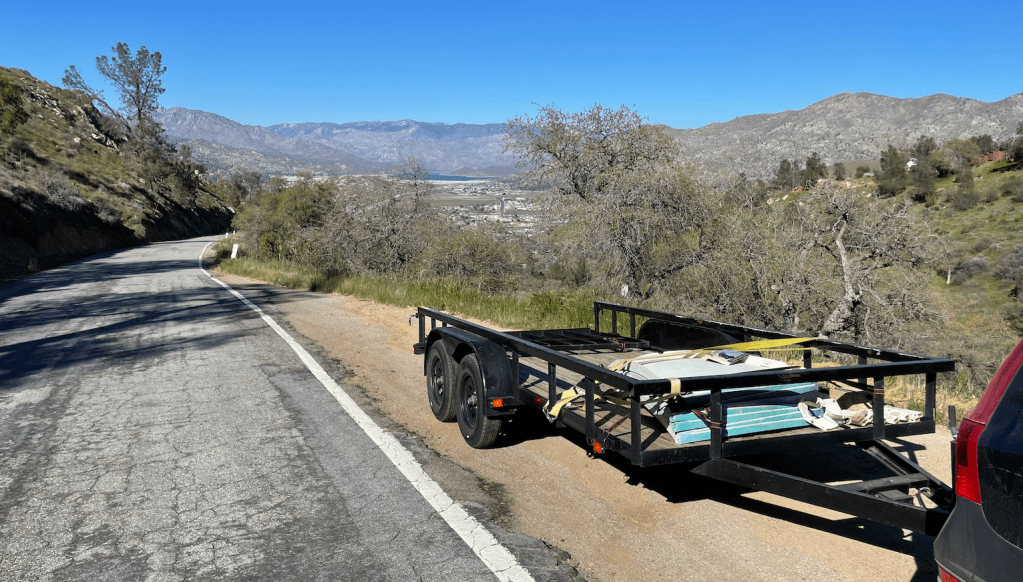
We scout Facebook Marketplace for these towers across rural communities and make the long drive to get them, once a 4-hour one-way with a 14-foot trailer.
These sections are modular, allowing us to dial in the exact height required. They’re also lighter and easier to maneuver on-site thanks to built-in mounting provisions. Of course, not all of them are in ready-to-deploy shape. Some repair work and elbow grease are required before we can put them into service.
Using antenna towers in our RF research
Conventionally, these towers are used to support rigid antennas. Most commercial installations have fixed antennas, while most amateurs want rotatable beams. We’ll do neither of those and use the towers primarily for supporting wire antennas that must be high off the ground to work well.
We plan to use our two tallest towers (54 and 67 feet), which are easy to crank up and down, as agile bases for long wire antenna experiments. Others, like the fixed 35-foot Rohn 25, will be used as elevating structures to augment the effects of the canyons in our fixed installations.
Results, not red tapes
Building this gear stash isn’t glamorous. It involves Facebook treasure hunts, trailer runs on steep dirt roads, and a lot of quality time with ratchet straps. But the upfront effort means that when an experiment calls for a 10-foot dish or a 40-foot mast, we’re not waiting on a purchase order — we’re already setting it up.


Leave a Reply